

Legal Advice for Buying a Franchise in Australia: What the Agreement Covers
Getting legal advice for buying a franchise can help you understand what you are actually agreeing to before you commit to the business.
A franchise agreement can govern much of the relationship between you and the franchisor, including fees, operating requirements, suppliers, territory, renewal, transfer, termination and the franchisor's ability to make changes to the system.
Australia's Franchising Code of Conduct provides important protections and disclosure requirements, but it does not replace a careful review of the franchise agreement and disclosure material.
This article explains the main legal issues a prospective franchisee should understand and how a franchise lawyer can help assess the documents before you sign.
Key Takeaways
- The franchise agreement can affect almost every part of how you operate the business.
- The disclosure document and franchise agreement should be considered together.
- Prospective franchisees generally receive at least 14 days to consider the required documents before entering the agreement.
- Fees, renewal rights, restraints, transfer provisions and franchisor powers can have long-term commercial consequences.
- Legal advice and financial advice serve different purposes when assessing a franchise opportunity.
- A franchise lawyer can explain the legal effect of the documents and identify issues to raise before you commit.
Why the Franchise Agreement Matters
A franchise is not simply the purchase of a brand or business system.
The franchise agreement creates the contractual relationship between the franchisor and franchisee and can impose detailed obligations that continue for many years.
Depending on the franchise, the agreement may regulate:
- where and how you operate;
- what products or services you can offer;
- approved suppliers;
- royalties and other fees;
- marketing contributions;
- training and operating standards;
- use of intellectual property;
- premises requirements;
- renewal rights;
- selling or transferring the franchise;
- restraints after the relationship ends; and
- the circumstances in which the agreement can be terminated.
The commercial opportunity may look attractive, but the agreement determines many of the rules under which that opportunity must operate.
What Does a Franchise Lawyer Review?
A franchise lawyer usually considers the franchise agreement alongside the disclosure document and other relevant transaction documents.
The purpose is to understand how the documents work together and what they mean for the proposed franchisee.
Areas that commonly warrant attention include:
- the length of the franchise term;
- renewal rights and conditions;
- fees and ongoing payments;
- territory and exclusivity;
- supplier restrictions;
- franchisor powers;
- significant capital expenditure;
- performance obligations;
- sale and transfer provisions;
- termination rights;
- restraints of trade; and
- personal guarantees or other security obligations.
A legal review should help you understand the effect of those provisions rather than simply summarising what the agreement says.
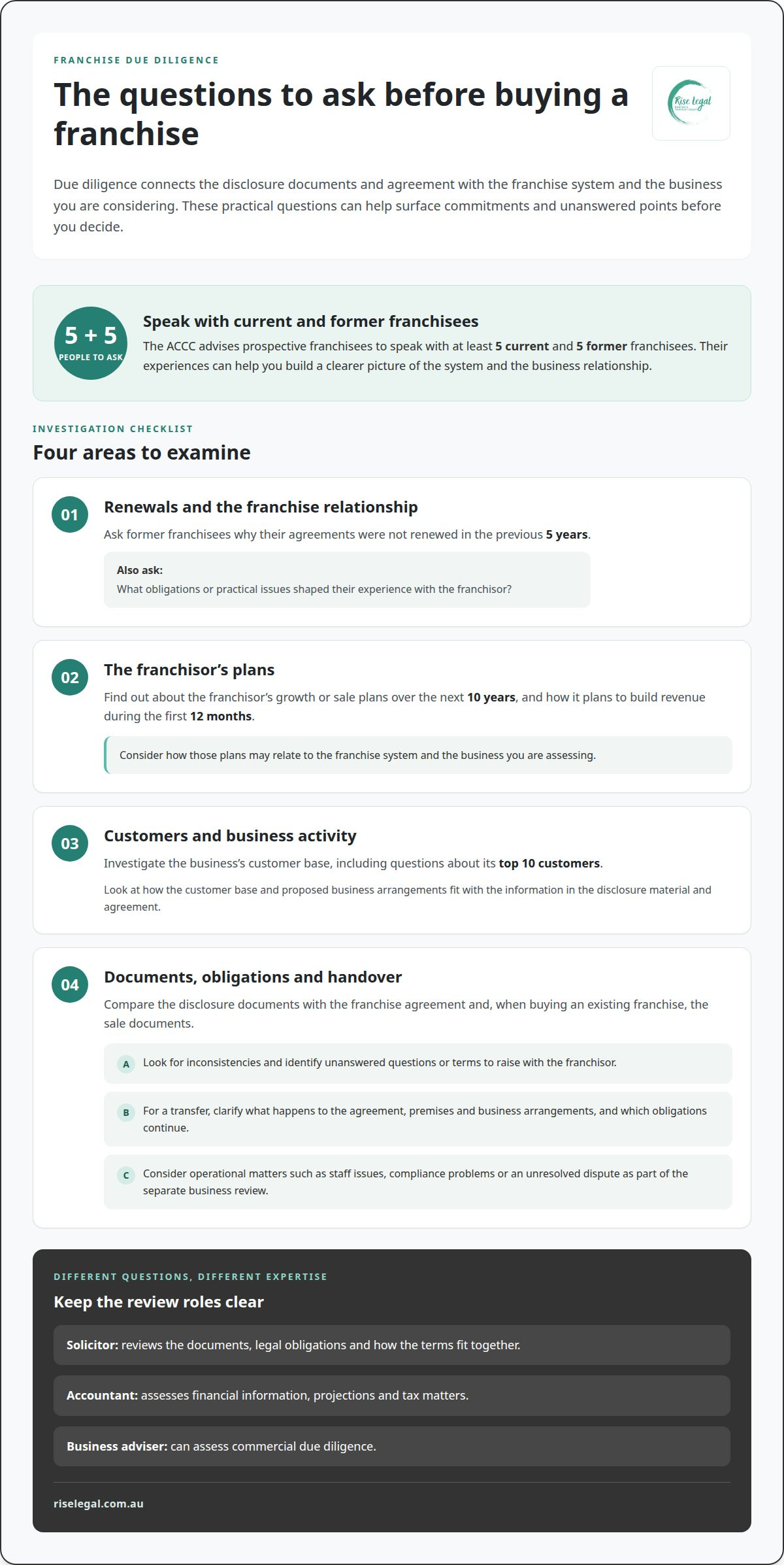
The Franchise Agreement and Disclosure Document Work Together
The disclosure document provides information about the franchise system, while the franchise agreement contains the contractual obligations that will govern your relationship with the franchisor.
They should therefore be read together.
The disclosure document can contain information about matters such as:
- the franchisor and franchise system;
- current and former franchisees;
- fees and payments;
- significant capital expenditure;
- litigation and insolvency history;
- territory;
- specific purpose funds;
- renewal and termination; and
- circumstances in which the agreement may be varied.
A legal review can identify where the disclosure material and agreement need to be considered together and where further clarification may be appropriate.
What Does the Franchising Code Require Before You Sign?
Franchising in Australia is regulated by the Competition and Consumer (Industry Codes—Franchising) Regulations 2024.
For most new franchise arrangements, the franchisor must provide the required documents in final form at least 14 days before the franchise agreement is entered into.
These documents generally include:
- the proposed franchise agreement;
- the disclosure document;
- a copy of the Franchising Code; and
- other required documents relevant to the arrangement.
The ACCC explains the current franchise disclosure and document requirements.
The 14-day period gives a prospective franchisee time to consider the documents and obtain independent advice before becoming legally committed.
Franchise Fees and Ongoing Costs
The initial franchise fee is only one part of the financial commitment.
Depending on the system, a franchise agreement may require payments for:
- ongoing royalties;
- marketing or specific purpose funds;
- technology;
- training;
- rent or premises costs;
- approved products or suppliers;
- renewal;
- transfer; and
- required upgrades or capital expenditure.
The legal review and financial assessment serve different purposes.
A franchise lawyer can explain what the agreement obliges you to pay and when those obligations can change. An accountant or financial adviser can assess the impact of those commitments on the proposed business model and cash flow.
Significant Capital Expenditure
Required investment during the term can materially affect the economics of a franchise.
The current Franchising Code contains specific requirements concerning significant capital expenditure, including disclosure and discussion of circumstances in which the expenditure may be recouped.
For franchise agreements entered into, renewed or extended on or after 1 November 2025, the agreement must also provide the franchisee with a reasonable opportunity to make a return on investment required by the franchisor during the term.
That does not amount to a guarantee of profitability, but it makes the length of the agreement and required future investment particularly important issues to understand before signing.
Can the Franchisor Change the Agreement?
This depends on the agreement.
Some franchise agreements allow the franchisor to make certain changes without obtaining the franchisee's agreement each time. This can include changes made through operating manuals, policies or other parts of the franchise system where the agreement permits them.
The disclosure document must provide information about circumstances in which the franchise agreement may be varied unilaterally.
However, the Franchising Code prohibits a franchisor from varying a franchise agreement with retrospective effect unless the franchisee has given written consent.
A prospective franchisee should therefore understand not only the obligations that exist when signing, but also how those obligations may change during the term.
Territory and Competition
Territory provisions can have a significant impact on a franchise business.
The agreement and disclosure document may address:
- the geographic area in which you operate;
- whether that territory is exclusive;
- online sales;
- customers located outside the territory;
- other franchisees operating nearby; and
- competition from the franchisor or related businesses.
The commercial value of a territory can depend heavily on exactly what protection the agreement provides rather than how the opportunity was described during initial discussions.
Term and Renewal Rights
The remaining franchise term is particularly important because a franchise agreement does not necessarily give you a perpetual right to operate the business.
A five-year franchise, for example, does not automatically mean you have a further five years after that period.
Renewal may depend on conditions contained in the agreement and can involve further fees, new agreement terms, refurbishment requirements or other obligations.
The term should also be considered alongside the level of investment required to establish and operate the franchise.
Selling the Franchise Later
Even if you are only just buying the franchise, it is worth understanding how you will eventually be able to exit.
The agreement may contain rules dealing with:
- franchisor approval of a buyer;
- transfer fees;
- buyer eligibility;
- training;
- outstanding amounts;
- premises requirements; and
- the agreement the incoming buyer will enter.
These provisions can affect how easily the business can later be sold and the value a buyer may place on it.
Rise Legal also assists with business sales and purchases where the transaction involves buying or selling an existing franchise.
Restraints After the Franchise Ends
Franchise agreements commonly contain restraint provisions dealing with what a franchisee can do after the relationship ends.
Depending on the wording and circumstances, a restraint may seek to restrict:
- operating a competing business;
- working within a particular geographic area;
- soliciting customers;
- soliciting employees; or
- using confidential information or intellectual property.
The practical effect of these provisions can be significant, particularly if you intend to remain in the same industry after leaving the franchise system.
Personal Guarantees and Liability
Operating a franchise through a company does not necessarily mean your personal exposure is limited to the company.
A franchisor, landlord or other party may require directors or business owners to provide personal guarantees.
The wording and scope of those guarantees should be understood before they are signed.
Buying an Existing Franchise
Buying an existing franchise adds another layer to the transaction.
You are not simply assessing the franchise system. You are also purchasing an operating business with its own history, assets, employees, lease arrangements and liabilities.
The franchise documents therefore need to be considered alongside the business sale documentation.
If you are purchasing an existing outlet, our article on buying a franchise from an existing owner explains some of the additional issues that can arise.
Can You Negotiate a Franchise Agreement?
Potentially.
A franchise agreement may be presented as a standard form document, but that does not necessarily mean every provision is incapable of discussion.
A franchise lawyer can identify provisions that warrant clarification or amendment and help you understand their significance before deciding what matters to raise with the franchisor.
The franchisor is not obliged to accept every proposed change.
The important point is that any negotiated outcome should be properly reflected in the contractual documents rather than relying on informal statements or assurances.
Legal Advice and Financial Advice Are Different
A franchise lawyer does not determine whether the business will be profitable.
Legal advice focuses on your rights, obligations and risks under the documents.
An accountant or appropriately qualified financial adviser can assess matters such as:
- financial records;
- cash flow;
- forecasts;
- tax;
- working capital; and
- the financial viability of the proposed investment.
For many prospective franchisees, the strongest assessment combines legal, accounting and commercial advice.
Fixed-Fee Franchise Agreement Reviews
Rise Legal provides fixed-fee franchise agreement reviews for franchisees across Australia.
Our review can include the franchise agreement, disclosure document and relevant supporting documents so you understand the legal obligations you are considering before you commit.
We focus on explaining the important issues in plain English, identifying material legal risks and discussing matters that may warrant clarification or negotiation.
You know the agreed scope and professional fee upfront.
Learn more about our legal services for franchisees or our broader franchising legal services.
Frequently Asked Questions
What does a franchise agreement cover?
A franchise agreement can cover territory, fees, royalties, suppliers, operating standards, intellectual property, premises, training, renewal, transfer, termination and restraints. The exact obligations depend on the particular agreement.
How long do I have to review a franchise agreement?
For most new franchise arrangements, the Franchising Code requires the relevant franchise documents to be provided in final form at least 14 days before the franchise agreement is entered into.
Should I have the disclosure document reviewed as well?
Yes. The disclosure document contains information about the franchise system that should be considered together with the legal obligations in the franchise agreement.
Can a franchise agreement be negotiated?
Some provisions may be open to negotiation or clarification, although the franchisor does not have to accept proposed changes. A lawyer can help identify provisions that warrant discussion before you sign.
Can the franchisor change the agreement later?
It depends on the wording of the agreement. Some agreements permit certain unilateral changes. However, the Franchising Code prohibits retrospective variation without the franchisee's written consent.
Does a lawyer assess whether the franchise will be profitable?
No. A lawyer advises on the legal rights, obligations and risks arising from the documents. Financial viability, forecasts, tax and cash flow are generally matters for an accountant or appropriately qualified financial adviser.
How much does a franchise agreement review cost?
Rise Legal offers franchise agreement reviews on a fixed-fee basis, with the scope and professional fee agreed upfront. The appropriate scope can depend on the documents and circumstances of the proposed purchase.
Buying a Franchise? Speak With Rise Legal
Buying a franchise can involve a substantial financial commitment and a contractual relationship that lasts for years.
Understanding the agreement before you sign can help you make the decision with a clearer picture of your legal obligations and the restrictions that may affect the business.
If you are considering buying a franchise, contact Rise Legal to discuss a fixed-fee franchise agreement review.

Article by Helen Kay, Principal Lawyer, Rise Legal
Helen Kay is the Managing Director and Principal Lawyer at Rise Legal, an Australian commercial and business law firm advising business owners, franchisors and franchisees across Australia. Helen practises in commercial law, franchising, business contracts, business sales and purchases, trademarks and related business law matters.
Disclaimer
This article provides general information only and does not constitute legal advice. It does not take into account your specific circumstances. Laws and regulatory requirements may change, so you should obtain legal advice relevant to your situation before acting on the information contained in this article. Liability limited by a scheme approved under professional standards legislation.