
Why Business Protection Matters for Australian Businesses
Running a business involves managing risks, from unpaid invoices and contract disputes to intellectual property issues and disagreements between business owners. Without the right legal protections, these problems can become expensive and disruptive.
At Rise Legal, we regularly help Australian business owners address legal risks that could have been identified and managed earlier. Taking a proactive approach can help protect your assets, clarify your legal obligations and support your business as it grows.
There are five key areas every business owner should review:
- Your Business Structure
- Your IP Protection
- Your Clients
- Your Business Partners
- Your Suppliers
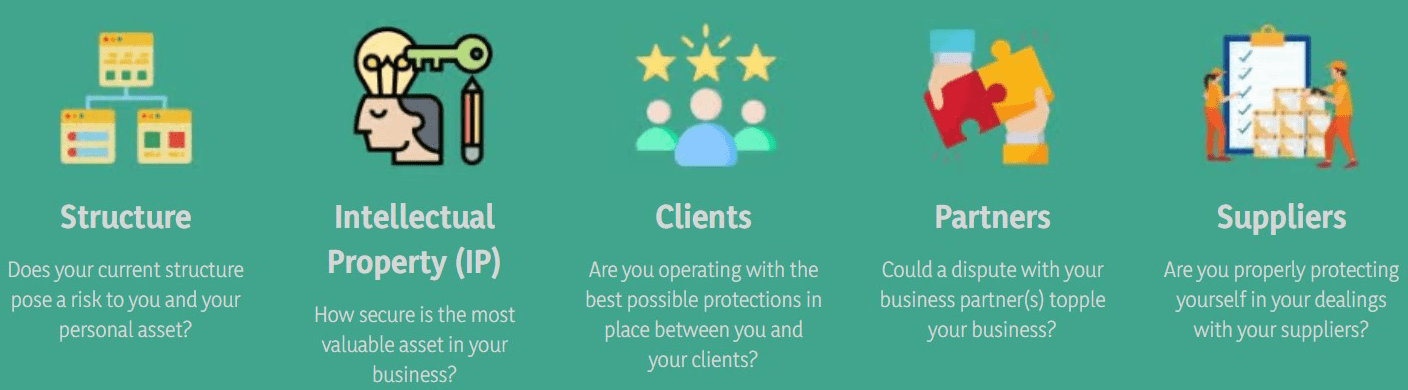
The Five Critical Areas of Business Risk
1. Business Structure: Choose the Right Business Structure
Choosing the right business structure is one of the first steps in protecting your business. Your structure affects how you operate, manage financial risks, meet legal obligations and plan for future growth.
In Australia, common business structures include sole traders, partnerships, companies and trusts. Each has different implications for personal liability, ownership, taxation and ongoing compliance.
For example, operating through a company can provide a degree of separation between your personal assets and business liabilities. However, directors may still face personal liability in certain circumstances, including where personal guarantees have been provided or legal obligations have been breached.
As your business grows, takes on investors or introduces new owners, your original structure may no longer meet your needs.
How Rise Legal can help: Our business lawyers can review your existing structure, explain the legal risks and help you establish arrangements that support your business objectives and long-term plans.
2. Intellectual Property: Protect Your Brand and Intellectual Property
Your business name, logo, original content, software and other intellectual property can be among your most valuable commercial assets. Protecting these assets helps preserve your brand identity, reduce the risk of unauthorised use and maintain your competitive position.
One common mistake business owners make is assuming that registering a business name with ASIC automatically protects their brand. It doesn't. A registered business name is different from a registered trademark.
Registering a trademark can give you exclusive rights to use your protected brand elements in Australia for the goods or services covered by the registration.
Businesses should also consider who legally owns intellectual property developed by employees, contractors or external agencies.
For example, if a contractor creates your business logo, website or software, the ownership of that work may depend on the terms of your agreement. Without appropriate contractual provisions, your business might not own all the rights it expects.
How Rise Legal can help: Our intellectual property lawyers assist with trademark searches, applications, registrations and commercial agreements designed to protect your business's intellectual property rights.
3. Client Engagement: Use Clear Client Contracts and Terms & Conditions
Clear, legally sound client agreements are essential for protecting your business and maintaining good customer relationships.
Without properly drafted Terms & Conditions, disagreements can arise over payment obligations, the scope of services, delivery timeframes, refunds and responsibility when something goes wrong.
A well-drafted client agreement should clearly address:
- Payment terms: When invoices are due, late payment consequences and recovery of outstanding amounts.
- Scope of work: Exactly what products or services your business will provide, including any exclusions.
- Liability and risk: How responsibility is allocated between the parties, subject to applicable laws.
- Cancellation and termination: The circumstances in which an agreement can end and any resulting obligations.
- Dispute resolution: How disagreements should be handled before they escalate.
For example, a service provider working without clear payment terms may struggle to recover overdue invoices or charge for additional work outside the original agreement.
Your contracts must also comply with applicable Australian laws, including the Australian Consumer Law and unfair contract terms requirements.
How Rise Legal can help: Our contract lawyers prepare customised client agreements and Terms & Conditions that clarify expectations, address common commercial risks and provide practical protection for your business.
4. Partnerships: Document Shareholder and Business Partner Arrangements
Going into business with another person can create opportunities for growth, but even strong business relationships can face challenges when circumstances change.
A properly drafted Shareholders Agreement or Business Partnership Agreement establishes clear expectations between owners and provides a framework for managing important business decisions.
Depending on your business structure, your agreement should address:
- Ownership and responsibilities: Each owner's interest, role and obligations.
- Decision-making: How important decisions are made and what approvals are required.
- Profit distribution: How profits and other financial benefits are allocated.
- Exit arrangements: What happens if an owner wants to leave, retire or sell their interest.
- Disagreements: Processes for addressing deadlocks and disputes between owners.
- Unexpected events: What happens if an owner dies, becomes incapacitated or can no longer participate in the business.
For example, imagine two shareholders who each own 50% of a company but disagree about its future direction. Without an agreed decision-making or deadlock resolution process, the business could face significant disruption.
Addressing these possibilities early helps owners manage their interests and protect business continuity.
How Rise Legal can help: Our business lawyers prepare Shareholders Agreements, Partnership Agreements and Buy-Sell Agreements tailored to your ownership structure and commercial objectives.
5. Supplier Arrangements: Protect Your Business with Supplier and Contractor Agreements
Your business may depend on suppliers, contractors and service providers to deliver products, complete projects or maintain daily operations.
Without clear written agreements, problems involving delayed deliveries, poor-quality work, unexpected costs or interrupted services can affect your cash flow, customer relationships and business reputation.
Well-drafted supplier and contractor agreements should address:
- Products and services: What must be supplied, including quality standards and specifications.
- Pricing and payment: Agreed fees, payment schedules and circumstances where prices may change.
- Delivery and performance: Timeframes, milestones and consequences of delays.
- Liability and insurance: Responsibility for losses, damage and other commercial risks.
- Intellectual property: Ownership and permitted use of materials, designs or other work created under the agreement.
- Termination: When either party can end the arrangement and what happens afterwards.
For example, if your business relies on a supplier to deliver essential materials, an agreement that addresses delays, performance failures and termination rights can help you respond when supply problems arise.
Similarly, engaging a contractor without clear intellectual property provisions could leave uncertainty about who owns the work they produce.
How Rise Legal can help: Our commercial lawyers draft and review supplier agreements, independent contractor agreements and other business contracts to help you manage risk and establish clear working relationships.
Is Your Business Properly Protected?
Many business owners only find gaps in their legal protection when something goes wrong.
Rise Legal helps Australian business owners identify legal risks and put practical protections in place, from contracts and trademarks to shareholder agreements and business structures.
With fixed-fee legal services and advice in plain English, you'll know what you're paying for before work begins.
Book a free discovery call with our business lawyers to discuss your legal requirements.
Disclaimer: The information provided on this page is general in nature and is intended for informational purposes only. It does not constitute legal advice and should not be relied upon as a substitute for advice tailored to your specific circumstances. We recommend seeking independent legal advice before making any decisions based on this information.