

Table of Contents
- What is a Commercial Lawyer and How Can They Assist Your Business?
- Navigating the Australian Commercial Law Landscape
- Understanding Legal Costs: The Fixed-Fee Approach
- A Practical Checklist for Reviewing Your Business’s Legal Health
- Working with Rise Legal
What is a Commercial Lawyer and How Can They Assist Your Business?
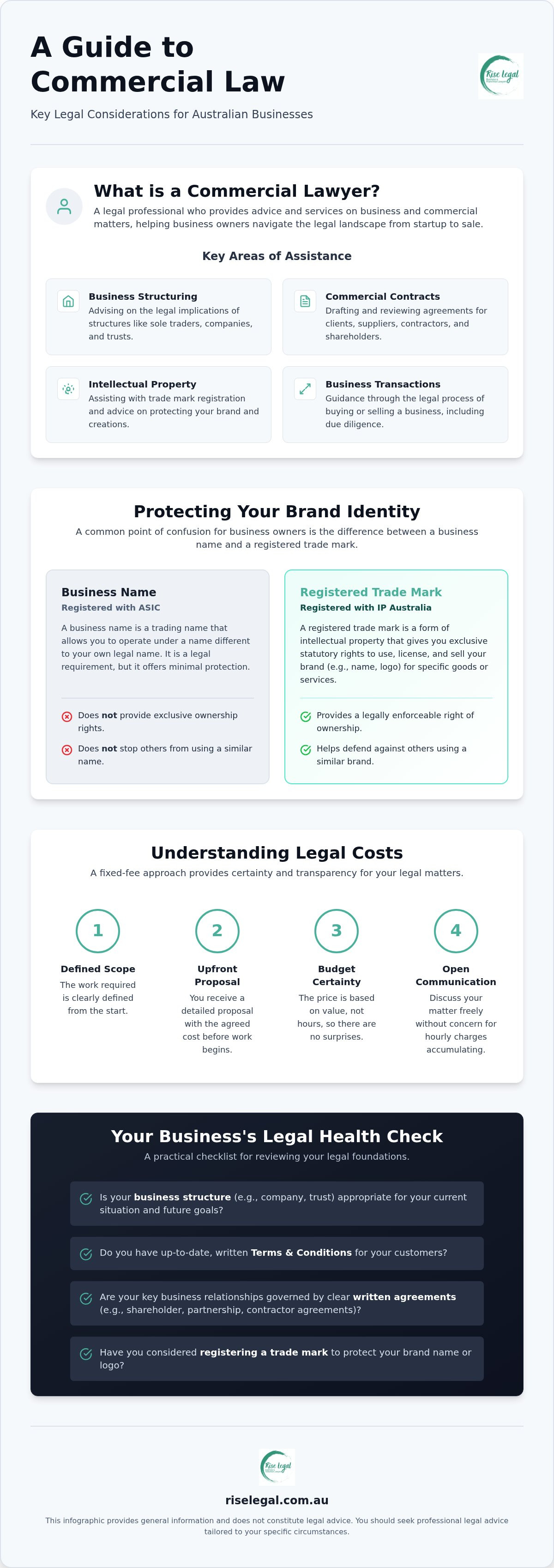
A commercial lawyer provides legal advice and services related to business and commerce. They can assist entrepreneurs and business owners at various stages, from initial setup and structuring to ongoing operations, growth and eventual sale. Engaging a commercial lawyer can be a proactive step to address the legal framework surrounding your business activities.
Their role often involves drafting, reviewing and negotiating contracts, advising on compliance with Australian laws, and helping with transactions such as buying or selling a business. The objective is to provide clear, practical guidance that aligns with your commercial goals.
Key Areas Where a Commercial Lawyer Can Provide Assistance
A commercial lawyer’s work is broad, but it typically centres on the legal aspects of running a business in Australia. This includes:
- Business Structuring: Advising on the legal implications of different business structures, such as sole traders, partnerships, companies and trusts.
- Commercial Contracts: Preparing and reviewing a wide range of agreements, including Terms and Conditions, contractor agreements and shareholder agreements.
- Intellectual Property: Assisting with the identification and registration of trade marks and providing advice on how to manage intellectual property.
- Business Transactions: Guiding businesses through the legal processes involved in buying or selling a business, including due diligence, contract negotiation and settlement.
- Franchising: Providing legal advice to franchisors and franchisees on their rights and obligations under the Franchising Code of Conduct.
When to Consider Engaging a Commercial Lawyer
Legal advice can be sought at any time, but there are key moments in a business’s lifecycle where it can be particularly useful. Seeking legal input during the business structuring phase, for example, can help you understand the legal implications of your chosen setup from the outset.
It can also be useful to consult a lawyer before entering into significant agreements, launching a new product or service, or considering major changes such as franchising or selling the business. Early advice can help you understand your legal position and make informed commercial decisions.
Navigating the Australian Commercial Law Landscape
Operating a business in Australia involves dealing with a range of legal and regulatory requirements. A commercial lawyer works with key pieces of legislation and regulatory frameworks that govern how businesses interact with each other and with consumers.
Key legal frameworks include:
- The Corporations Act 2001 (Cth): This is the principal legislation regulating companies in Australia. It sets out rules for forming a company, the duties of directors and processes for corporate governance and reporting.
- Australian Consumer Law (ACL): Contained within the Competition and Consumer Act 2010 (Cth), the ACL provides a national set of protections for consumers. It also applies to many business-to-business transactions, including in relation to misleading or deceptive conduct and unfair contract terms.
- Personal Property Securities Register (PPSR): The PPSR is a national online register where businesses can record security interests in personal property. It can be an important tool for businesses supplying goods on credit or dealing with security interests in assets.
Commercial Contracts: The Handshake in Writing
While verbal agreements can be made, written contracts provide clarity and a formal record of what was agreed. A well-drafted contract helps the parties understand their rights and obligations and can reduce the likelihood of misunderstandings later.
Common commercial contracts include:
- Terms and Conditions: These set out the rules for how you supply goods or services to your customers.
- Shareholder or Partnership Agreements: These documents govern the relationship between the owners of a business, including how decisions are made, how profits are distributed and what happens if an owner wants to exit.
- Contractor and Employment Agreements: These define the terms of engagement for individuals working in or for your business.
Intellectual Property: Your Business’s Intangible Assets
Your brand and original creations can be valuable business assets. Understanding how to manage them is an important part of commercial law.
A common point of confusion for Australian business owners is the difference between a business name and a trade mark.
- Business Name: A business name registered with the Australian Securities and Investments Commission (ASIC) allows you to trade under a name other than your own legal name. Registering a business name does not, by itself, create proprietary rights or stop others from using a similar name.
- Registered Trade Mark: A registered trade mark can provide exclusive statutory rights to use the registered mark in connection with the specific goods or services for which it is registered. A registered trade mark can therefore form an important part of a business’s intellectual property strategy.
When engaging contractors who may create intellectual property for your business, it is important that the agreement clearly addresses ownership. The contract should specify whether IP ownership is assigned to the business or licensed for its use.
Understanding Legal Costs: The Fixed-Fee Approach
Uncertainty about legal costs can be a concern for business owners. Rise Legal addresses this by providing fixed-fee proposals for defined scopes of legal work. This allows clients to understand the agreed scope and cost before work begins.
A fixed-fee model means the agreed fee is set for a defined scope of work, giving the client clarity about the cost before work begins. This upfront clarity helps with budgeting and gives clients a clear understanding of the agreed cost for the defined scope of work.
The Value of Tailored Legal Documents
Generic document templates may not reflect the way your business operates or address the Australian laws that apply to your particular arrangement. A legal document that is not tailored to your operations may not adequately address your circumstances.
Professionally drafted agreements can take into account the particular commercial arrangements of your business and reflect those arrangements more accurately.
A Practical Checklist for Reviewing Your Business’s Legal Health
Periodically reviewing your business’s legal documents and structures can be useful. It is not always necessary to conduct a review every 12 months, but a review may be appropriate when significant changes occur. This could include changes to the law, your business structure, ownership, products, services or general operations.
This checklist provides a framework for identifying areas that may require a legal review.
Stage 1: Foundation and Structuring
- Business Structure: Is your current structure still suitable for your business’s operations, ownership and long-term plans? Legal advice should be considered alongside input from your accountant on tax implications.
- Owner Agreements: Do you have a current Shareholders Agreement or Partnership Agreement in place?
- Corporate Records: Are your company, trust, ownership and governance records consistent with the way the business is currently operated?
Stage 2: Operational Arrangements
- Terms and Conditions: Have your T&Cs been reviewed in light of changes to unfair contract terms laws under the Australian Consumer Law?
- Contractor Agreements: Do your agreements with contractors and consultants clearly define the scope of work, payment terms and ownership of intellectual property?
- Brand Identity: Is your primary brand name or logo registered as a trade mark with IP Australia?
Stage 3: Growth and Future Planning
- Franchising: If you are a franchisor, have your franchise documents and disclosure processes been reviewed against the current Franchising Code of Conduct?
- Commercial Leases: Have you reviewed important lease terms and noted key dates for renewal or exercise of options?
- Exit Strategy: Have you considered a succession or exit plan for the business?
Working with Rise Legal
Rise Legal provides practical commercial legal advice for business owners across Australia. The firm assists with Terms and Conditions, commercial contracts, franchising and franchise reviews, trade marks, business sales and purchases, shareholder agreements, contractor agreements, commercial leases, PPSR and related commercial legal work.
Rise Legal provides fixed-fee proposals for defined legal work, giving clients clarity about costs from the outset.
Our services are delivered Australia-wide using modern technology to assist business owners regardless of their location. We focus on commercial and business law and do not undertake disputes or litigation.
Request a Fixed-Fee Proposal
If you need assistance with a commercial legal matter, contact Rise Legal to discuss the work required. We can then provide a fixed-fee proposal setting out the scope of work and associated cost where appropriate.
Contact the Rise Legal team today to request a fixed-fee proposal.
Frequently Asked Questions
What does a commercial lawyer do?
A commercial lawyer advises businesses on their legal rights, responsibilities and obligations. They draft and review legal documents such as contracts and agreements, assist with business transactions including sales and purchases, and provide advice on areas such as intellectual property, franchising and business structuring.
How much do commercial lawyers charge in Australia?
Legal fees vary depending on the firm, the type of work and the scope of the matter. Rise Legal provides fixed-fee proposals for defined legal work so clients know the agreed cost before engaging the firm.
What are the benefits of engaging a lawyer to buy or sell a business?
When buying or selling a business, a lawyer can assist with preparing or reviewing the contract of sale, conducting legal due diligence, managing negotiations on legal terms and facilitating the settlement process. Their involvement can help formalise the transaction and clarify the obligations of each party.
What is the difference between a business lawyer and a commercial lawyer?
In Australia, the terms “business lawyer” and “commercial lawyer” are often used interchangeably. Both commonly refer to legal professionals who advise on legal matters connected with business and commercial activities. The specific services offered can vary from one firm to another.
Can a commercial lawyer help with franchising agreements?
Yes. A lawyer with experience in franchise law can assist franchisors and franchisees. They can assist franchisors with preparing franchise documents and advise franchisees by reviewing proposed agreements and disclosure documents to help them understand their legal rights and obligations under the Franchising Code of Conduct.
How long does it take to get a commercial contract drafted?
The time required to draft a commercial contract depends on its complexity, the scope of the work and any negotiation involved between the parties. A timeline for the particular matter can be discussed and confirmed when you request a proposal.
Disclaimer
This article provides general information only and does not constitute legal advice. It does not take into account your specific circumstances. Laws and regulatory requirements may change, so you should obtain legal advice relevant to your situation before acting on the information contained in this article. Liability limited by a scheme approved under professional standards legislation.
Share this article using the links below: